Overview
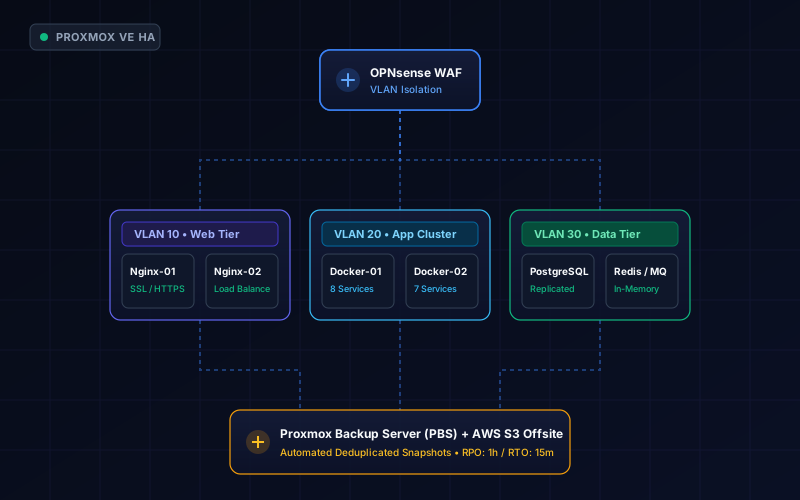
- Multi-tier virtualized infrastructure on a 4-node Proxmox cluster with VLAN segmentation and automated backups.
- Designed, provisioned, and continuously maintained for maximum uptime, reliability, and security standards.
Problem Statement
- Needed a secure, automated, and observable production-grade setup with zero single points of failure.
- Manual deployment steps and unmonitored services introduced risk and high mean-time-to-recovery (MTTR).
Architecture
- Multi-layer architecture with strict network isolation, automated health checks, and redundant service paths.
- Comprehensive telemetry tracking system metrics, application logs, and instant alert routing.
Technology Stack
Infrastructure & Platform
Proxmox VELinuxVLAN / NetworkingPBS BackupAWS S3
Automation & Security
CI/CDSSL/TLSFirewallFail2ban
Implementation
- Provisioned infrastructure layers with standardized configurations and automated scripts.
- Configured secure network segmentation, routing, and access control policies.
- Integrated automated backup pipelines and disaster recovery validation schedules.
Infrastructure Diagram
Security Considerations
- Network isolation with VLANs, firewall policies, and least-privilege access rules.
- Encrypted communications with automated SSL/TLS certificates and hardened SSH configurations.
Monitoring
- Continuous health and performance metrics collection with automated alerts.
- Visual dashboards tracking system load, latency, error rates, and storage capacity.
Backup & Disaster Recovery
- Automated incremental snapshots and offsite replication.
- Tested recovery procedures ensuring low RTO and RPO benchmarks.
Challenges
- Ensuring zero service disruption during configuration rollouts and container updates.
- Optimizing resource allocation and memory usage across multi-tenant workloads.
Lessons Learned
- Infrastructure automation and early monitoring integration dramatically reduce debugging time.
- Consistent tagging, logging, and documentation simplify long-term cluster maintenance.
Future Improvements
- Further automate self-healing nodes and expand automated integration tests.
- Implement advanced platform engineering features for developer self-service.
Related
Related Projects
Other work with overlapping technologies or infrastructure patterns.
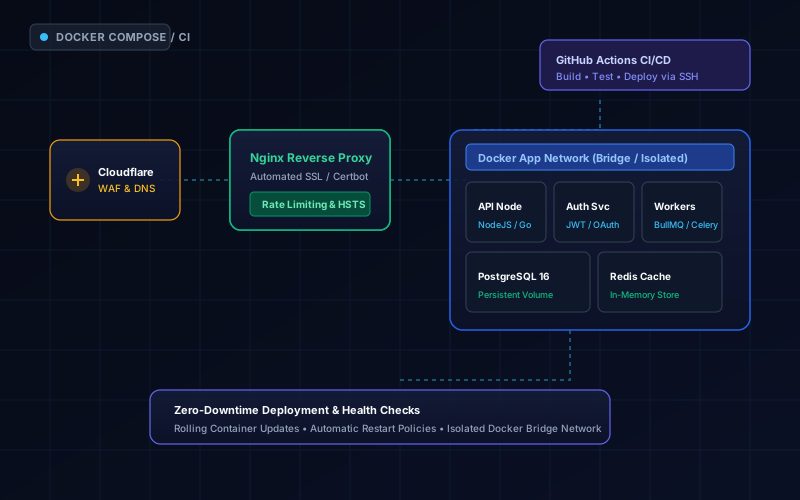
Containerized Application Platform
Dockerized applications with Nginx reverse proxy, SSL/TLS, and CI/CD deployment pipeline.
DockerNginxSSLCI/CD
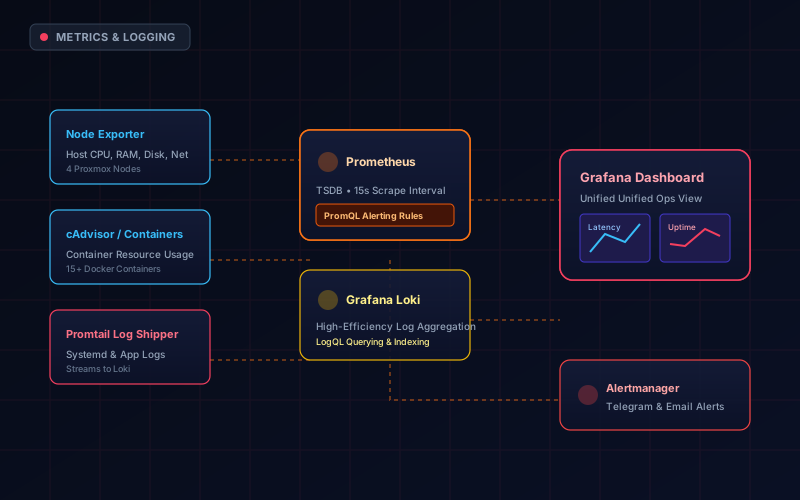
Observability & Monitoring Stack
Centralized monitoring with Prometheus, Grafana and Loki for metrics, logs and alerting.
PrometheusGrafanaLokiAlertmanager