Engineering

Architecture

How production infrastructure is designed — topology, platforms, observability, security, and recovery patterns.

REPLACE: Short overview of your engineering approach to designing and operating infrastructure — environments supported, design principles, and operational priorities.

Architecture

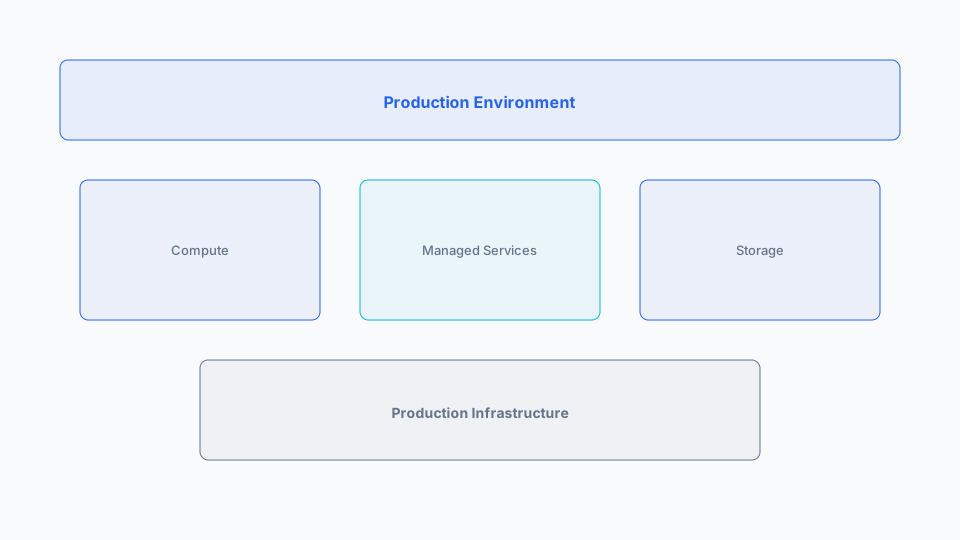
Production Infrastructure

REPLACE: Describe your production environment — cloud provider, compute model, environment separation, and provisioning approach.

  • REPLACE: Environment layout — e.g. dev/staging/prod separation, accounts, or VPCs
  • REPLACE: Compute and storage baseline — instances, managed services, or Kubernetes
  • REPLACE: Provisioning model — IaC tooling, change control, and deployment cadence
  • REPLACE: Operational ownership — who runs changes, on-call, and release gates
Production infrastructure diagram placeholder
REPLACE: Caption — regions, environments, core services, and traffic entry points.

Architecture

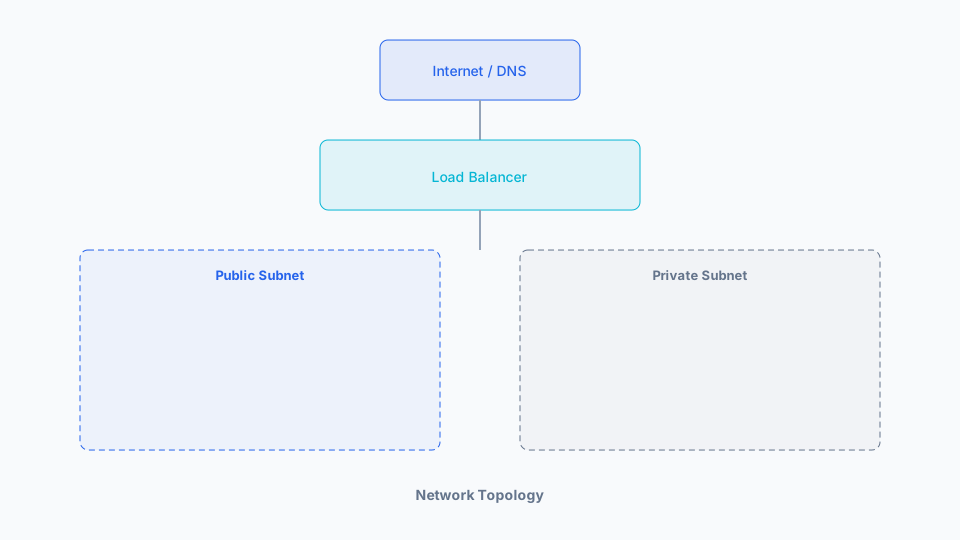
Network Topology

REPLACE: How traffic enters the environment and how subnets, routing, and connectivity are structured.

  • REPLACE: Edge and ingress — load balancers, DNS, CDN, or API gateway
  • REPLACE: Segmentation — public/private subnets, security groups, or NACLs
  • REPLACE: Internal connectivity — service-to-service, VPN, or peering
  • REPLACE: Egress controls — NAT, proxy, or restricted outbound paths
Network topology diagram placeholder
REPLACE: Caption — VPC layout, subnets, and primary traffic flows.

Architecture

Docker Architecture

REPLACE: Container runtime scope — local dev, CI builds, registry flow, and production orchestration if applicable.

  • REPLACE: Image build pipeline — base images, scanning, tagging, and registry
  • REPLACE: Runtime placement — single hosts, Swarm, ECS, or Kubernetes
  • REPLACE: Configuration — env vars, secrets injection, and resource limits
  • REPLACE: Networking and storage — bridge/overlay networks, volumes, and persistence
Docker architecture diagram placeholder
REPLACE: Caption — build → registry → deploy flow and runtime components.

Architecture

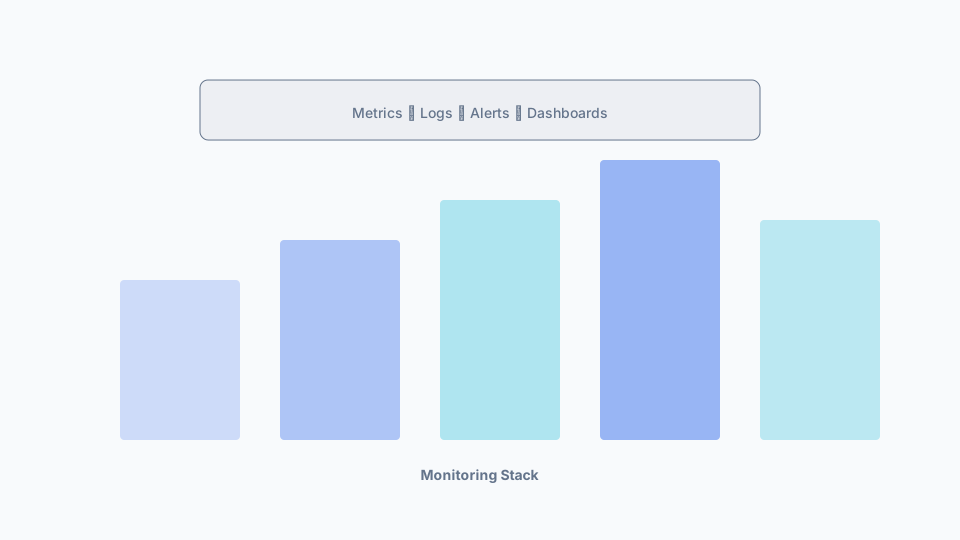
Monitoring Stack

REPLACE: Observability approach — metrics, logs, traces, and how alerts reach operators.

  • REPLACE: Metrics — what is collected, retention, and primary dashboards
  • REPLACE: Logging — aggregation, search, and correlation with incidents
  • REPLACE: Alerting — thresholds, routing, escalation, and noise control
  • REPLACE: SLOs or review practice — error budgets, post-incident review, or capacity checks
Monitoring stack diagram placeholder
REPLACE: Caption — agents, collectors, storage, and alert paths.

Architecture

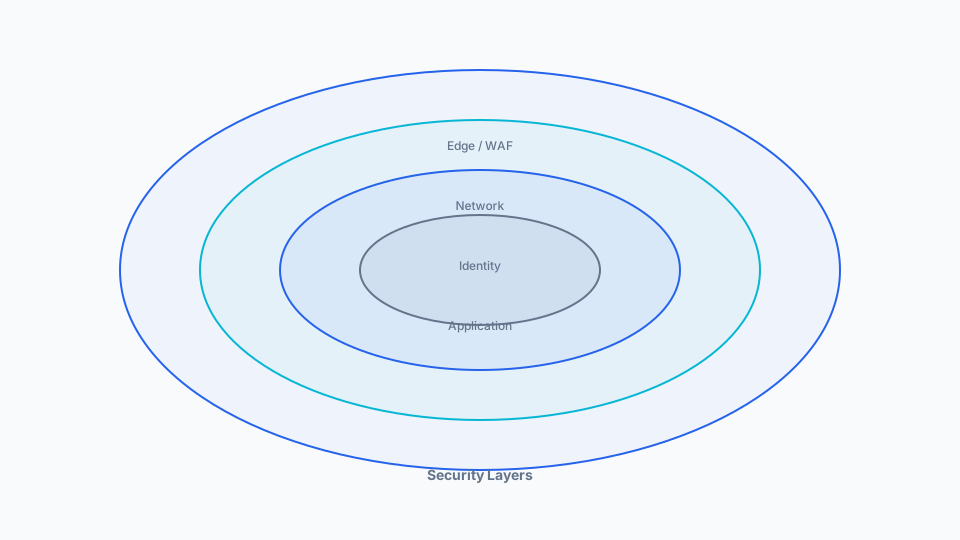
Security Layers

REPLACE: Defense-in-depth controls across identity, network, data, and supply chain.

  • REPLACE: Identity and access — IAM, RBAC, MFA, and least-privilege patterns
  • REPLACE: Network security — segmentation, WAF, TLS, and bastion or SSM access
  • REPLACE: Data protection — encryption at rest/in transit, secrets management
  • REPLACE: Supply chain — image scanning, dependency checks, and patch cadence
Security layers diagram placeholder
REPLACE: Caption — security zones and control placement across the stack.

Architecture

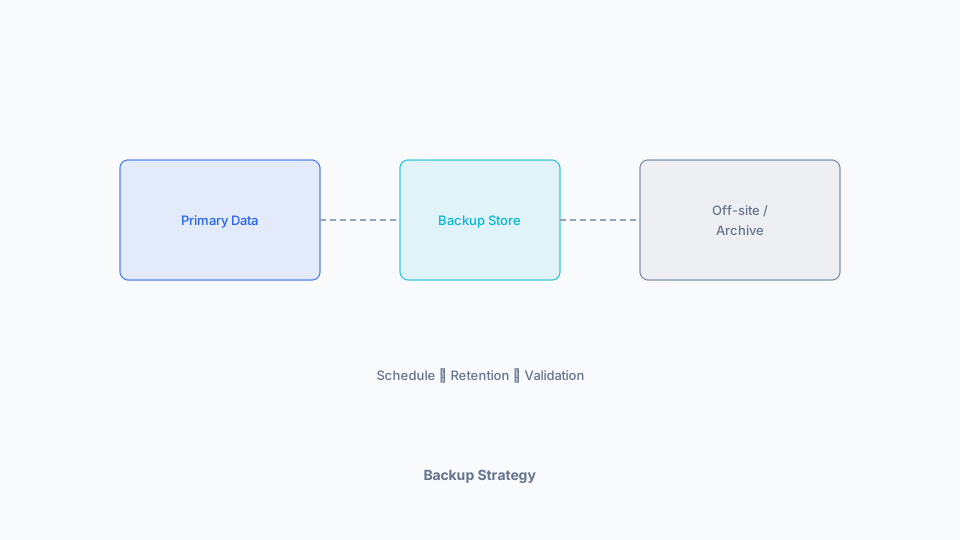
Backup Strategy

REPLACE: What is backed up, how often, where copies live, and how restores are validated.

  • REPLACE: Backup scope — databases, volumes, configuration, or state files
  • REPLACE: Schedule and retention — frequency, lifecycle, and off-site replication
  • REPLACE: Access controls — who can trigger restore and audit requirements
  • REPLACE: Validation — restore tests, checksums, or periodic drill schedule
Backup strategy diagram placeholder
REPLACE: Caption — backup sources, targets, and retention tiers.

Architecture

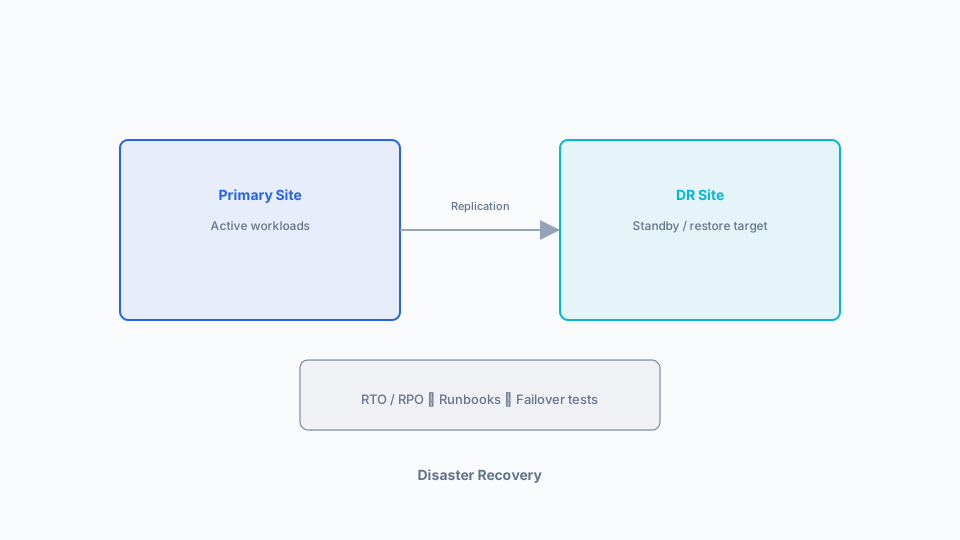
Disaster Recovery

REPLACE: Recovery objectives and failover approach for critical workloads.

  • REPLACE: RTO/RPO targets — only include numbers you can substantiate
  • REPLACE: Failover model — active/passive, multi-region, or rebuild-from-backup
  • REPLACE: Runbooks — detection, decision criteria, and communication steps
  • REPLACE: Testing — drill frequency and last validated restore path
Disaster recovery diagram placeholder
REPLACE: Caption — primary/secondary sites and failover sequence.

Decisions

Technology Decisions

Documented choices — context, rationale, and accepted trade-offs.

REPLACE: Technology choice — e.g. Terraform for infrastructure provisioning

Context

REPLACE: Problem or constraint that drove the decision.

Rationale

REPLACE: Why this tool or pattern fit — team skills, module reuse, state management, or provider support.

Trade-offs

REPLACE: Trade-offs accepted — learning curve, lock-in, or operational overhead.
REPLACE: Technology choice — e.g. GitHub Actions for CI/CD

Context

REPLACE: Delivery requirements and existing toolchain.

Rationale

REPLACE: Why this pipeline model — integration, cost, self-hosted runners, or policy gates.

Trade-offs

REPLACE: Limitations or alternatives considered.

REPLACE: Technology choice — e.g. Prometheus + Grafana

Context

REPLACE: Observability gaps before adoption.

Rationale

REPLACE: Fit for metrics model, alerting, and team workflows.

Trade-offs

REPLACE: Storage, cardinality, or managed vs self-hosted trade-offs.

Diagrams

Infrastructure Diagrams

Visual references for topology, platforms, and operational layers. Replace placeholders with your own diagrams.

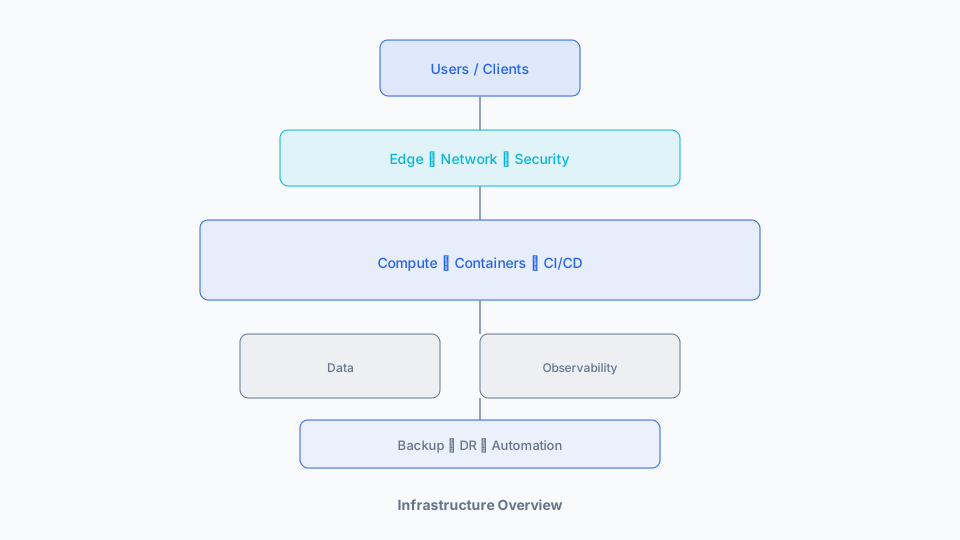
Infrastructure overview diagram placeholder
REPLACE: End-to-end view — user traffic through compute, data, and observability layers.
Production infrastructure reference diagram
REPLACE: Consolidated production layer reference — swap with your primary environment diagram.
Network topology reference diagram
REPLACE: Consolidated network reference — swap with detailed VPC or hybrid cloud diagram.